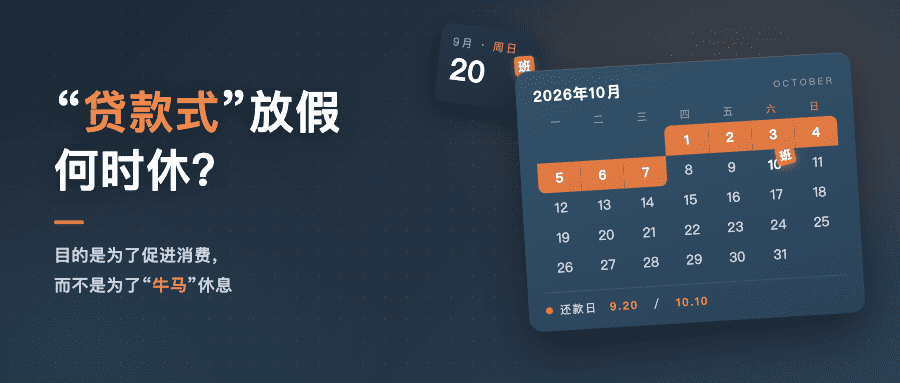
Why Does Your National Day Holiday Feel Like a Loan?
Sunday, September 20, 2026, is a make-up workday that repays part of China's seven-day National Day break, with a second repayment due on Saturday, October 10. The tiaoxiu system, created in 1999 to lift domestic demand after the Asian financial crisis, assembles long holidays by borrowing weekends and charging fatigue as interest. The model persists because long, unbroken breaks drive travel and spending — 888 million domestic trips in the eight-day 2025 holiday — even though occupational health psychology and sleep research show that a weekend squeezed between working days provides no real recovery. The November 2024 reform raised statutory holidays to 13 days and capped consecutive workdays at six, yet unified holiday swapping remains written into the rules. Loan-style holidays will end only when rest is treated as the purpose of a holiday, not merely a means of promoting consumption.
2026年9月20日(星期日)是一次补班,偿还国庆七天假期的一部分“欠款”,第二笔“还款”定在10月10日(星期六)。调休制度诞生于1999年,当时中国在亚洲金融危机后设立黄金周以提振国内需求;它通过“借用”周末拼出长假,并把疲惫当作利息。这一模式之所以延续,是因为连续的长假能带动出行和消费——2025年八天假期录得8.88亿人次国内出游——尽管职业健康心理学和睡眠研究都表明,夹在工作日之间的周末无法带来真正的恢复。2024年11月的修订把法定假日增加到13天,并将连续工作天数一般限制在六天以内,但“统一调休”仍被写进规则。只有当休息被视为假期的目的、而不仅仅是促消费的手段时,贷款式假期才会结束。